
The Rise of Embedded Finance in Fintech and Payments

Financial services are quietly moving into places people already spend time online.
Instead of visiting a bank or opening a separate financial app, users can now make a payment, apply for credit, or access a financial product directly inside the platforms they already use. This shift is known as embedded finance.
From e-commerce checkouts to ride-hailing apps and SaaS platforms, companies are beginning to embed financial services directly into non-financial platforms. The result is a smoother experience for users and entirely new business opportunities for companies.
Behind this transformation is a growing ecosystem of fintech companies, APIs, and open banking infrastructure that make it possible to integrate banking services without becoming a bank.
For businesses, embedded finance creates new revenue streams and stronger customer relationships.
For users, it simply makes financial transactions easier.
What Is Embedded Finance?
At its core, embedded finance refers to the integration of financial services into non-financial platforms.
Instead of relying solely on traditional banking or financial institutions, companies can now integrate financial products and services directly into their own digital platform.
This means a company that isn’t a bank can still offer:
- payments
- lending
- insurance
- digital wallets
- debit cards or branded credit cards
All within the app or platform the customer already uses.
For example:
- An online marketplace can embed a payment solution at checkout.
- A SaaS platform can offer embedded lending to help businesses manage cash flow.
- A ride-hailing app can provide drivers with instant payouts through digital wallets.
In each case, financial services are embedded directly into the customer experience.
The user never needs to leave the platform.
That is the power of embedded finance.
How Embedded Finance Works
Embedded finance involves a network of fintech companies, finance companies, and banking infrastructure providers working together.
Most non-financial companies do not build banking technology from scratch. Instead, they rely on embedded finance providers and fintechs that supply APIs and banking infrastructure.
These APIs allow companies to integrate financial services such as payments, cards, and lending into their platforms or applications.
A typical embedded finance ecosystem often includes:
Fintech companies providing the technology layer
- Financial institutions supplying regulated banking services
- Non-financial companies delivering the customer experience
- APIs connecting everything together
Through this model, companies can offer embedded finance products without becoming a bank themselves.
Types of Embedded Finance Products
The types of embedded finance products continue to expand as fintech evolves.
Some of the most common include:
1. Embedded Payments
An embedded payment system allows users to complete a transaction directly inside a platform.
Think of:
- e-commerce checkout payments
- in-app purchases
- ride-sharing payment systems
The goal is a seamless payment experience without leaving the platform.
2. Embedded Lending
Embedded lending allows platforms to lend money to users or businesses.
Examples include:
- point of sale financing
- merchant cash advances
- Buy Now Pay Later options
These lending products are integrated directly into the purchase or transaction flow.
3. Embedded Insurance
Platforms can also provide embedded insurance during transactions.
For example:
- travel insurance during flight booking
- device insurance during checkout
- delivery protection in e-commerce
4. Embedded Banking
Some companies go even further by offering embedded banking services like:
- debit cards
- digital wallets
- branded credit cards
- business banking tools
These services bring banking experiences directly into non-financial platforms.
The Role of Fintech in Driving Embedded Finance
Fintech companies are the primary force driving embedded finance across the global market. Increasingly, technologies such as AI in fintech are helping these platforms analyze financial data, automate processes, and improve how embedded financial services operate.
Traditional banking infrastructure was not designed for flexible integrations. Fintechs changed that by building API-based banking infrastructure that allows businesses to integrate financial services easily.
These fintech companies provide:
- payment infrastructure
- card issuing technology
- lending platforms
- digital banking tools
Through partnerships with fintech companies, non-financial companies can quickly launch an embedded finance offering.
Instead of spending years building financial technology, companies can plug into fintech APIs and launch new services faster.
This shift represents a broader movement away from traditional banking and toward digital banking ecosystems.
Open Banking as a Catalyst
A major force accelerating this shift is open banking.
Open banking allows financial data to be securely shared between institutions using APIs. This enables fintech companies and platforms to build financial products on top of existing banking infrastructure.
The relationship between open banking and embedded finance is powerful.
Open banking enables:
- secure data sharing
- payment initiation through APIs
- faster financial integrations
- personalized financial services
In many ways, open banking and embedded finance work together to reshape the financial ecosystem.
Open banking provides the data and connectivity, while embedded finance delivers the customer experience directly inside digital platforms.
Real-World Examples of Embedded Finance
Many companies already use embedded finance, often without customers realizing it.
These examples of embedded finance show how deeply financial services are being integrated across industries.
E-commerce Platforms
Online marketplaces frequently offer embedded payment systems at checkout.
Customers can:
- pay instantly
- split payments
- apply for financing
All during the same purchase flow.
This integration of financial services improves the customer experience and increases conversion rates.
Top Embedded Finance Companies
As the embedded finance ecosystem expands, many embedded finance providers focus on packaged platforms. But a smaller group of embedded finance companies prioritizes development, giving teams the tools to build and integrate financial services directly into their own digital platform.
These companies are less about pre-built features and more about enabling flexible financial product design, deeper control over transactions, and long-term scalability.
1/ Lerpal
Lerpal operates at the infrastructure layer of embedded finance, helping companies embed financial services with precision and control.

Its approach centers on:
- Flexible embedded finance APIs designed for real-world implementation
- Scalable architecture for high-volume transaction environments
- Clean integration patterns that streamline payment processing and ACH workflows
Lerpal supports a wide range of embedded finance products, from embedded payments to embedded lending, without forcing rigid templates. This makes it especially relevant for startups and growing fintech companies building differentiated financial experiences.
2/ Unit
Unit is one of the more established embedded finance providers offering a developer-friendly banking platform.
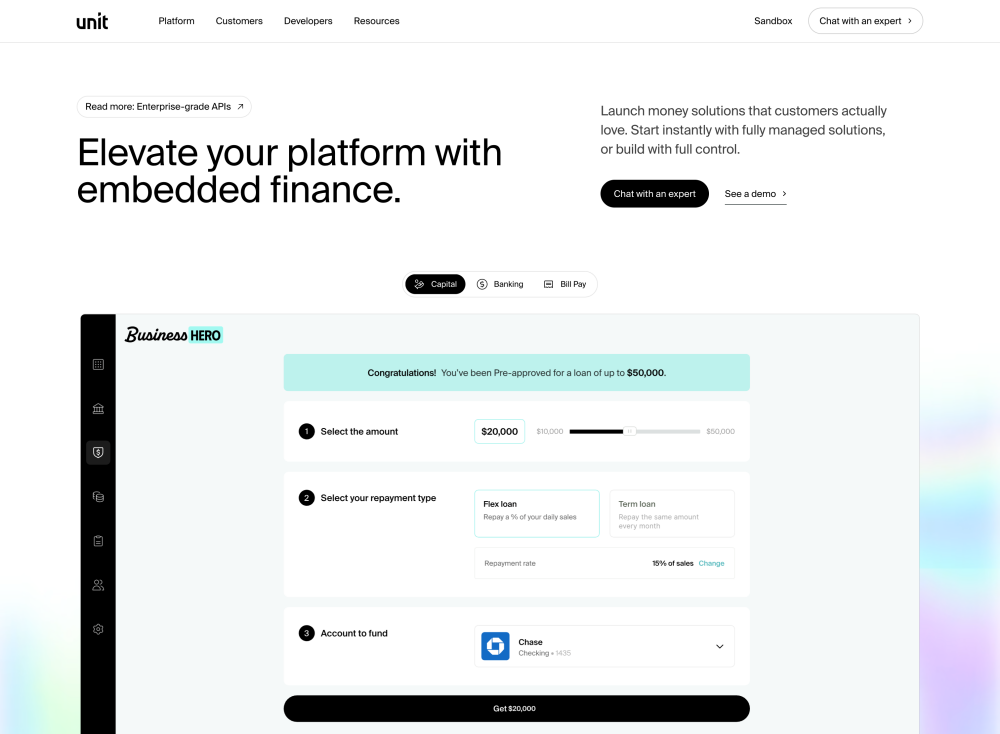
It enables companies to:
- Integrate financial services such as accounts, cards, and payment processing
- Launch embedded banking services with structured APIs
- Build financial products without relying entirely on traditional banking systems
Unit balances speed and flexibility, making it a common choice for fintech startups and software platforms looking to offer embedded financial services.
3/ Treasury Prime
Treasury Prime connects companies more directly with financial institutions, making it a strong option for teams that want deeper control over banking services.
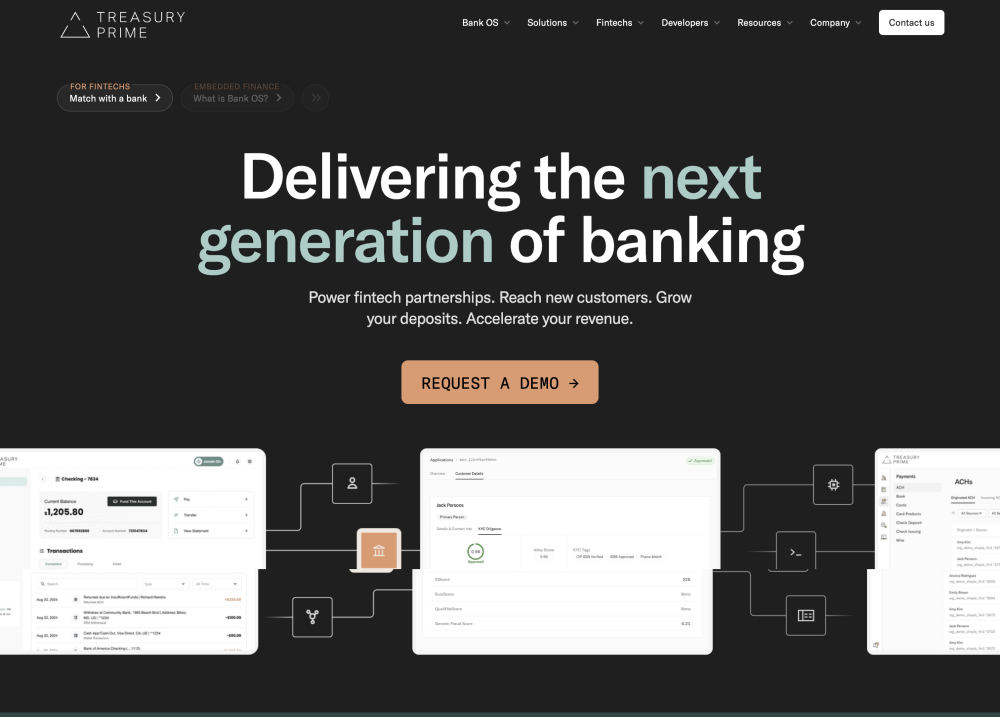
Its capabilities include:
- Direct access to banking infrastructure
- APIs for managing transactions, accounts, and payment flows
- Support for compliance within embedded banking environments
This model works well for companies aiming to move closer to the core of digital banking while still maintaining a seamless user experience.
4/ Bond
Bond focuses on helping companies launch and manage financial products, particularly in card issuing and embedded payments.
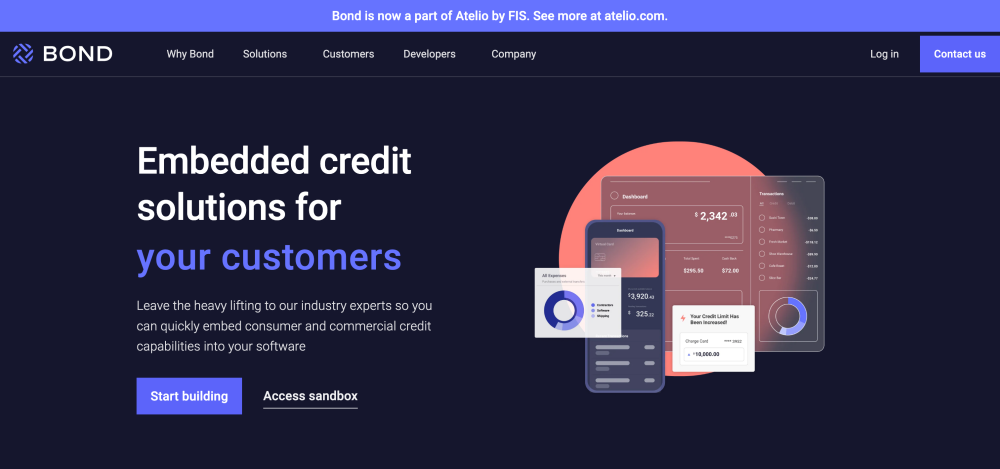
It allows businesses to:
- Offer embedded payment solutions and debit card programs
- Build branded financial services within their product
- Manage transaction flows with integrated compliance support
Bond is often used by non-financial companies looking to embed financial services into their customer journey without building everything from scratch.
5/ Increase
Increase takes a more technical, infrastructure-first approach to embedded finance.
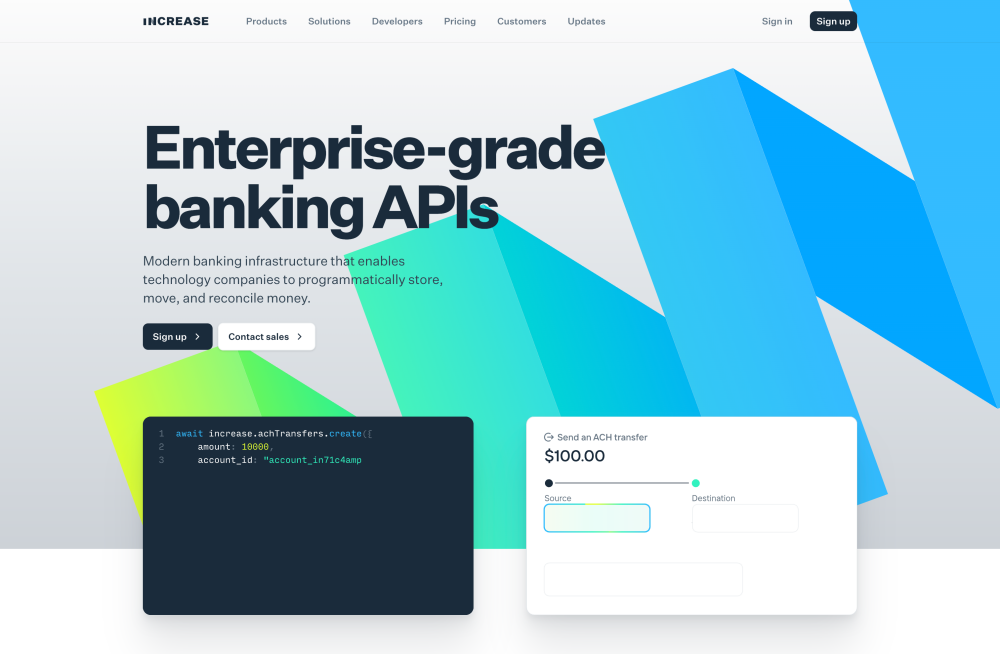
It provides:
- Low-level primitives for banking and payment processing
- Fine-grained control over transactions and financial workflows
- Reliable systems designed for scale and precision
This makes it a strong fit for engineering-led teams that want to build custom financial solutions and optimize every part of the transaction lifecycle.
Choosing the Right Embedded Finance Solution
Not all embedded finance platforms serve the same purpose. The right embedded finance solution depends on how deeply you want to integrate financial services into your product.
- For flexibility and scalable infrastructure → Lerpal
- For structured APIs and faster go-to-market → Unit
- For direct banking integration → Treasury Prime
- For embedded payments and card programs → Bond
- For deep technical control → Increase
As embedded finance continues to reshape how financial services are delivered, development-focused providers play a critical role. They enable companies to move beyond surface-level integrations and build truly seamless financial experiences that enhance customer engagement and unlock new revenue streams.
Unlock new revenue streams
Talk to our experts to embed financial services seamlessly into your platform and deliver faster, more connected payment experiences.
Ride-Hailing and Delivery Apps
Platforms like ride-sharing services embed financial services to manage:
- driver payouts
- in-app payments
- digital wallets
Drivers gain access to earnings quickly, while riders enjoy seamless transactions within the app.
SaaS Platforms
Many SaaS companies now embed financial services for business users.
For example, a business platform may allow companies to:
- accept payments
- manage invoices
- access short-term lending
All inside one platform.
This is where embedded finance enables software companies to expand their offerings and deepen customer relationships.
Benefits of Embedded Finance
The benefits of embedded finance extend to both businesses and customers.
Better Customer Experience
Customers expect fast and seamless digital experiences.
Embedded finance reduces friction by allowing users to:
- complete transactions faster
- access financial services instantly
- avoid switching between apps
Everything happens within the platform they already use.
New Revenue Streams
For businesses, embedded finance creates new revenue streams through transaction fees and financial products.
Companies can generate revenue from:
- payment processing
- lending products
- card programs
- insurance offerings
This turns financial services into a strategic growth engine for digital platforms.
Greater Financial Access
Embedded finance also increases access to financial services.
Small businesses or individuals who may not qualify through traditional banking channels can now access tailored financial products through platforms they trust.
Challenges and Complexities of Embedded Finance
Despite its growth, there are still complexities of embedded finance.
Companies must navigate:
- financial regulations
- compliance requirements
- data privacy
- partnerships with financial institutions
Successful embedded finance offerings often depend on strong partnerships with fintech companies and regulated banking providers, as well as a well-designed fintech compliance program that ensures regulatory obligations are properly managed.
The goal is to combine innovation with responsible financial infrastructure.
The Future of Embedded Finance
The rise of embedded finance is still in its early stages.
As fintech evolves and open banking expands globally, the integration of financial services into digital platforms will likely accelerate.
We will likely see:
- more sophisticated embedded finance products
- deeper fintech ecosystems
- stronger partnerships between banks and fintechs
- wider adoption across industries
Ultimately, embedded finance brings financial services closer to where people actually need them.
And that shift may redefine how financial services are delivered for decades to come.
A New Layer of Finance Is Forming
The rise of embedded finance signals a deeper shift in how financial services are delivered.
Instead of relying only on traditional banks, embedded finance integrates financial services directly into digital platforms, allowing companies to offer banking products exactly where customers need them.
Across industries, companies that embed financial capabilities into their services are transforming everyday transactions. Payments, lending, insurance, and digital wallets are no longer separate experiences. They are becoming part of the platforms people already use.
This is why embedded finance represents more than just another fintech trend. It reflects a structural evolution in the global embedded finance market, powered by API banking, fintech partnerships, and modern digital infrastructure.
If your team is exploring how embedded finance can help your platform evolve, the next step is understanding the infrastructure, partnerships, and strategy required to do it well.
Visit Lerpal to learn more about the future of fintech and digital financial ecosystems, or Contact Us to start a conversation about how embedded finance solutions can support your next stage of growth.

You may also like



Talk With Our Experts



Get advice and find the best solution