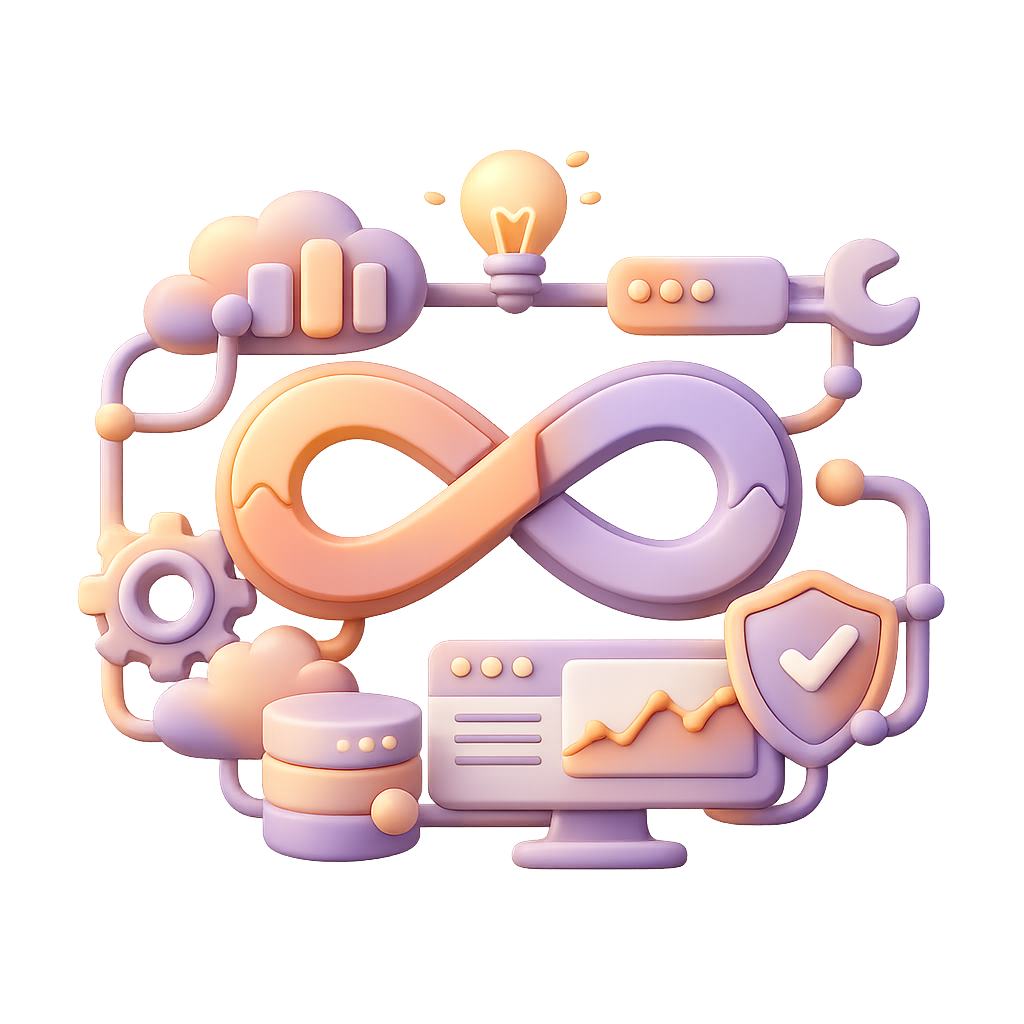
Build, deploy, and scale with confidence. We streamline delivery, strengthen reliability, and reduce incidents so your systems stay stable as your business grows.
DevOps & SRE friction builds where systems outpace structure
As systems scale, devOps & SRE services often struggle to keep environments stable and predictable. Gaps in coordination, visibility, and ownership create ongoing friction across infrastructure, deployment, and reliability workflows.
Unclear ownership
Responsibilities blur across teams. Without clear ownership, incidents stall, decisions slow down, and accountability becomes difficult to trace.
Deployment inconsistencies
Environments drift between stages. What works in one setup fails in another, creating instability across releases and ongoing confusion.
Limited system visibility
Monitoring is fragmented or incomplete. Teams lack a shared view of system health, making it harder to understand failures in real time.
Reactive incident response
Issues are handled only after impact. Without structured processes, teams remain in firefighting mode instead of managing reliability proactively.
Tooling fragmentation
Too many disconnected tools create noise. Teams spend more time navigating systems than maintaining infrastructure consistency.
Scaling complexity
As infrastructure grows, dependencies multiply. Systems become harder to manage, increasing the risk of failure across services.
Our Solution
Keep systems stable as delivery speeds up
Move forward with DevOps & SRE services that bring consistency to infrastructure and clarity to operations. Built to support steady delivery, controlled change, and reliable system behavior over time.
Structured deployments
Releases follow a defined path across environments, keeping changes consistent and reducing uncertainty as systems move from development to production.
Clear ownership model
Responsibilities are mapped across teams, so every service, system, and workflow has defined accountability throughout the lifecycle.
Unified system view
A shared operational perspective keeps infrastructure, services, and signals aligned, enabling teams to track system state without fragmentation.
Predictable incident flow
Incidents follow a structured process, allowing teams to manage events consistently and maintain control during high-pressure situations.
Continuous system tuning
Ongoing adjustments keep infrastructure aligned with demand, helping systems remain stable as usage patterns and operational needs evolve.
Move with confidence
Talk to our experts to unify SRE and DevOps practices, strengthen reliability, and scale automation and platform engineering.
DevOps and site reliability engineering come together as a set of practices grounded in software engineering principles. DevOps and SRE teams work closely, using automation, observability, and platform engineering to build consistent, well-structured systems across cloud resources.
DevOps Engineering
DevOps engineers design workflows and pipelines using version control and DevOps tools to automate software delivery. DevOps emphasizes collaboration across development teams.
SRE engineers apply software engineering to operations. SRE focuses on reliability, using metrics, SLOs, and observability to guide system behavior and maintenance.
Cloud platforms are structured with infrastructure as code and platform engineering practices. Teams build and manage scalable environments across cloud resources.
Continuous integration and delivery pipelines are built to automate it operations tasks. Tools like version control and testing frameworks support consistent releases.
Systems are instrumented with metrics, logs, and tracing to provide a clear view of behavior. Teams track performance through defined SLOs and maintain consistent system awareness.
Structured incident workflows guide teams through detection, response, and resolution. Clear processes help maintain control and coordination during system disruptions.
Our DevOps and site reliability engineering stack brings together trusted tools and platforms that support reliability at scale. We use cohesive, production-ready technologies covering automation, observability, metrics, and platform engineering to work from a consistent, credible foundation.
Industries We Serve
Built for teams where reliability and scale are non-negotiable
DevOps and site reliability engineering apply across industries running complex systems, continuous delivery, and cloud platforms where our DevOps and SRE teams support critical software and infrastructure.
Financial Services
Healthcare
Ecommerce & Marketplaces
SaaS & Product Platforms
Telecommunications
Media & Content Platforms
Case Studies
Proven reliability across real DevOps & SRE work
Examples of DevOps & SRE services applied in production environments. Each case reflects how development teams handle scale, coordination, and system stability under real operational pressure.
iCrossing
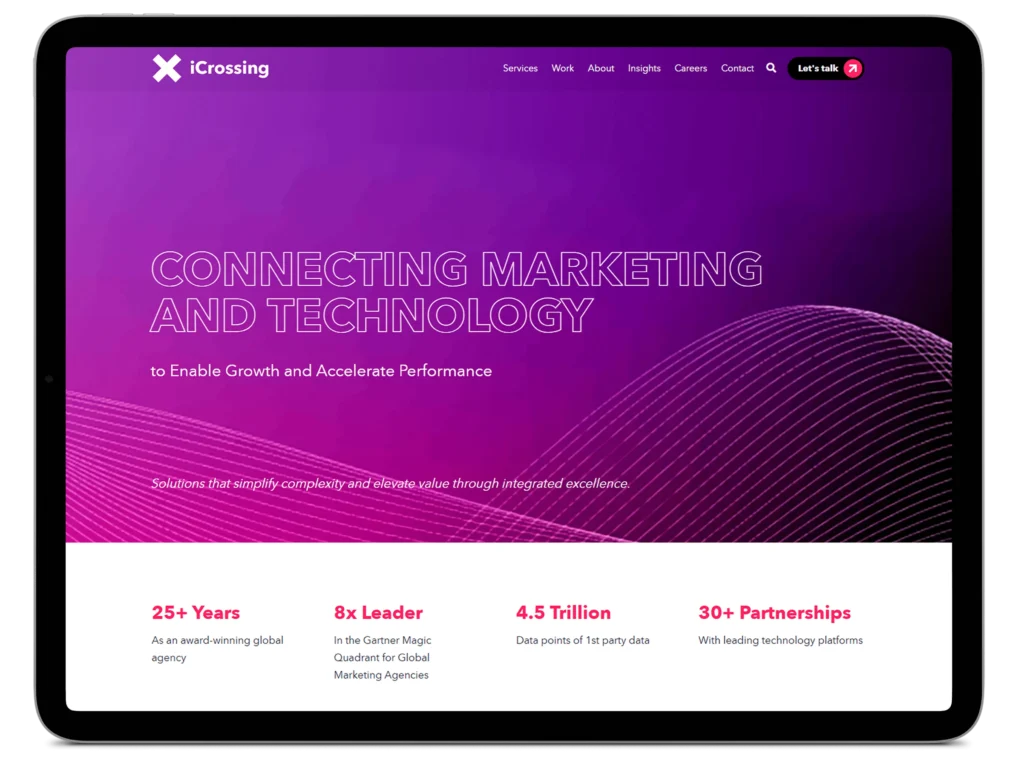
iCrossing needed to manage multiple CMS platforms and diverse client requirements. We applied DevOps and site reliability engineering with Agile workflows, aligning SRE and DevOps responsibilities and automation. The result was consistent delivery, improved reliability, and scalable content systems across platforms.
The Hill faced rapid audience growth and CMS limitations that constrained scalability. We combined DevOps and SRE practices, evolving architecture and introducing platform engineering on AWS. This enabled sustained reliability and growth, increasing daily users from 3,000 to 50 million.
A structured, transparent approach keeps systems predictable under pressure. We align early, adapt to context, and maintain continuity—so operations stay controlled as complexity grows
Every engagement starts with defined scoping and estimation. Teams align on expectations early, reducing ambiguity and keeping decisions grounded from the start.
Visible trade-offs
Constraints and decisions are made explicit. This keeps teams aligned in real time and avoids hidden dependencies that disrupt system stability later.
Context-led execution
No rigid frameworks. Each approach adapts to the system, team, and operational context, ensuring decisions reflect real conditions—not assumptions.
Continuity by design
The same team stays involved throughout. This preserves system knowledge, reduces handoff friction, and keeps operations consistent over time.
FAQs
Clear answers, practical direction
01. What’s the difference between DevOps and SRE?
The difference between DevOps and SRE comes down to emphasis. DevOps is a set of practices focused on delivery and collaboration, while site reliability engineering applies software engineering to reliability. In SRE vs DevOps, both share goals, but roles and metrics differ.
02. How do we decide between DevOps or SRE?
It’s rarely a strict DevOps vs SRE choice. We assess your workflows, team structure, and priorities, then shape how SRE and DevOps work together. The key differences are applied in context, not as rigid roles.
03. How do you integrate with existing teams?
We work alongside DevOps teams and SRE teams without forcing change too quickly. Using shared practices and tools, we reduce silo effects and build alignment across SRE and DevOps teams over time.
04. How do you approach reliability and metrics?
We define a clear metric framework based on best practices covering observability, service levels, and system behavior. SRE and DevOps differences explained in practice, with shared accountability across teams.
05. How do you support scaling and platform engineering?
We structure platform engineering to support growth without fragmentation. Using automation and consistent standards, DevOps and Site Reliability Engineering scale together with minimal disruption.